

Seattle Rockeries
Retaining Walls in Seattle and the Eastside
Seattle Rockeries builds rockery, block, and gabion retaining walls for hillside, lakeside, and tight-access residential properties across Seattle and the Eastside.
A retaining wall is only as strong as the drainage and ground preparation behind it. In Seattle-area soils, water often moves through loose sand and gravel until it hits dense glacial till, then pushes sideways against the wall. That is why drainage, footing depth, access planning, and slope conditions matter as much as the visible wall face.
Seattle Rockeries specializes in natural stone rockeries and engineered block retaining walls, with drainage built into the project from the start.
Get a Retaining Wall Quote
Tell us about your retaining wall project and we'll contact you to discuss your property, site conditions, and next steps.
"*" indicates required fields
Retaining Wall Services
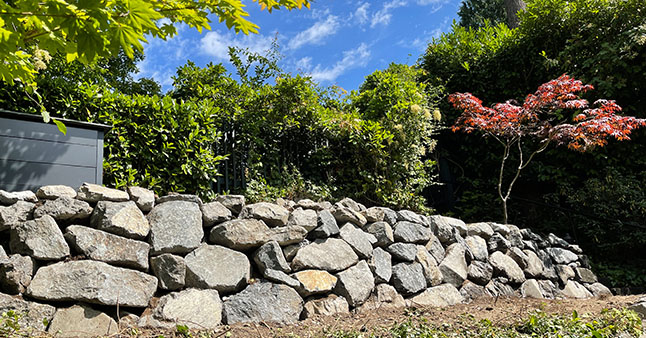
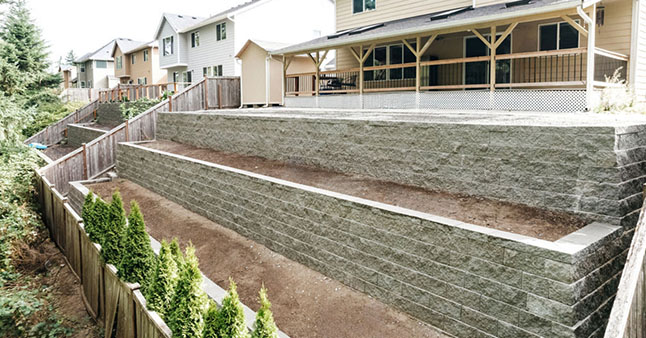
Rockery walls are a strong fit for natural slopes, Northwest landscapes, and properties where large basalt or granite stone creates a durable, natural-looking structure. Block walls are often used for taller, more uniform, engineered walls where clean lines, tiered layouts, or structural design requirements matter.
What We Build
Drainage Comes First
Most retaining walls fail because water builds up behind them. A wall without proper drainage can lean, bulge, crack, or slide even if the wall face looks strong. Our retaining wall projects are built with drainage in mind, including gravel backfill, perforated pipe where appropriate, filter fabric, and a working outlet for water.
This is especially important on Seattle and Eastside properties with steep slopes, glacial till, soft valley soils, high groundwater, or older walls that were built without modern drainage.
If an existing wall is already leaning, bulging, cracking, or showing drainage problems, visit our retaining wall repair page to learn how we evaluate whether a wall can be repaired or should be rebuilt.
Retaining Wall Service Areas
We build retaining walls across Seattle and nearby Eastside communities, including city-specific hillside, lakefront, valley, and critical-area conditions.
How Much Does a Retaining Wall Cost?
Retaining wall cost depends on height, length, material, site access, drainage, engineering, permits, and whether the property sits on a slope, near water, or in a mapped critical area.
| Project Type | Typical Cost Range | Common Scope |
|---|---|---|
| Small landscape or garden wall | $4,000 to $12,000 | Lower walls for planting areas, yard transitions, and small grade changes. |
| Mid-size structural wall | $12,000 to $35,000 | Two- to four-foot retaining walls with drainage built in. |
| Engineered hillside wall | $35,000 to $90,000 and higher | Walls over four feet, tiered systems, surcharge conditions, engineering, and permits. |
| Complex slope, lakefront, driveway, or tight-access project | Premium | Geotechnical work, difficult access, significant drainage, wall replacement, or critical-area permitting. |
Seattle Rockeries provides a written estimate after reviewing the site.
Get a Retaining Wall Quote
If your property needs a rockery wall, block wall, drainage rebuild, slope wall, or failed wall replacement, Seattle Rockeries can review the site and provide a written estimate.
Retaining Wall FAQs
Do I need a permit for a retaining wall?
Often, yes. In many local jurisdictions, walls over four feet require a permit and engineering. A wall under four feet may still need a permit if it supports a surcharge, sits near a property line, or is located in a critical area.
What is a surcharge load?
A surcharge is any added load above or behind the wall, such as a driveway, slope, parking area, structure, or another retaining wall. Surcharge conditions can trigger permitting and engineering even when the visible wall is not very tall.
Are rockery walls and block walls used for different situations?
Yes. Rockery walls are often chosen for natural slope stabilization and a Northwest stone appearance. Block walls are often used where a more uniform engineered wall, taller structure, or clean-lined layout is preferred.
Why do retaining walls fail?
The most common cause is water. Without a working drainage system, hydrostatic pressure can build behind the wall and cause leaning, bulging, cracking, movement, or eventual wall failure. Learn more about how retaining wall drainage works in Seattle-area conditions.
Can Seattle Rockeries replace an old failed retaining wall?
Yes. Seattle Rockeries replaces old rockeries, block walls, timber walls, and other failed retaining walls. When replacing a wall, we focus on correcting the cause of the failure, especially drainage, footing, base preparation, and soil-pressure problems. Learn more about our retaining wall repair and replacement services.